MDMoh DianMohammad Hassan Mohammadian · Realtor®
Menu
Plan your move↗
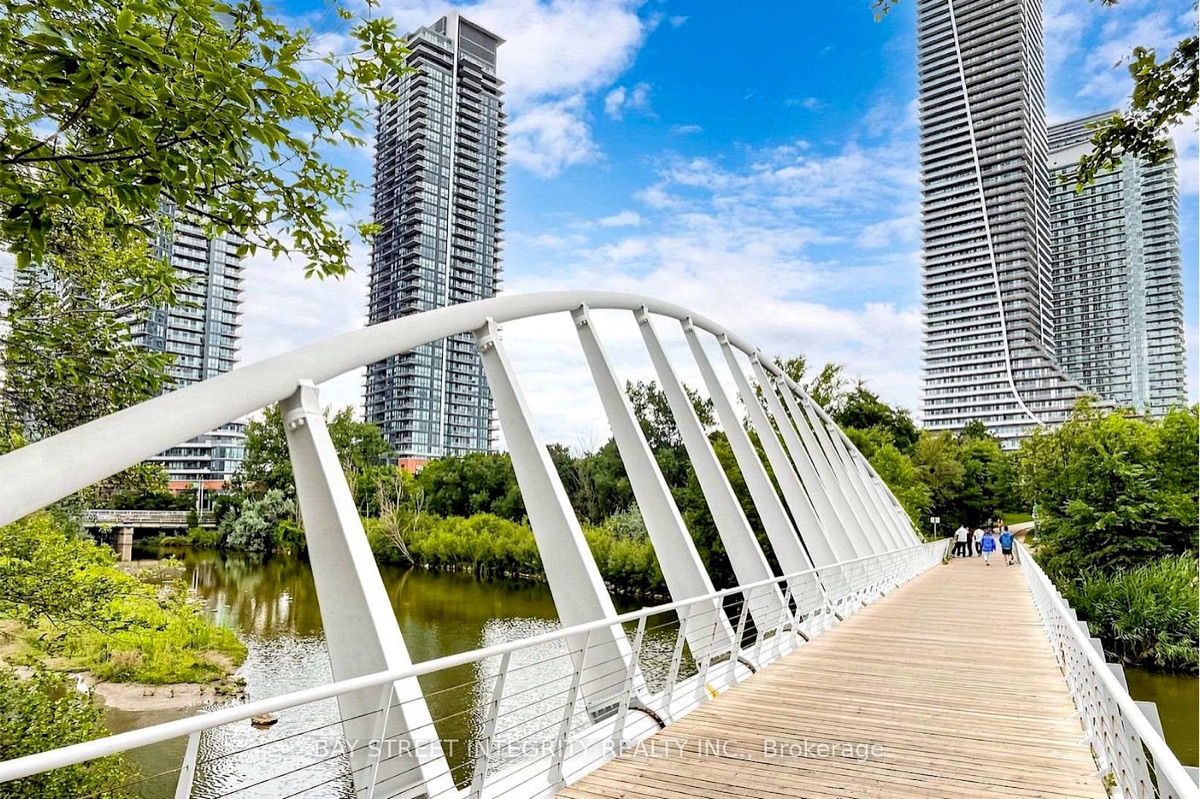
Humber Bay Shores neighbourhood view; no rent-control status is implied for any pictured building

Toronto renters & condo landlords · Ontario 2026–27

Your condo rent is $2,800. Could it jump to $3,024?

A new lease date does not tell you whether a condo is rent-controlled. The building's first residential occupancy, the correct LTB notice and the increase date are what you need to check.

2018 rule explained2026 & 2027 limitsNotice checklist
Compare possible rent increases ↓

One advertised rent. Two very different risks.

Before you sign for that waterfront condo, ask about next year—not only today.

Imagine two Toronto condos asking $2,800 a month. Both look suitable for a tenant. But one is in a building that was occupied years before the 2018 cutoff; the other may be in a genuinely new building first used as housing after the cutoff.

If a tenancy is covered by the normal guideline, a 2026 2.1% illustrative increase changes $2,800 to $2,858.80 when all statutory notice and timing requirements are met. In an eligible guideline-exempt tenancy, a hypothetical 8% notice would instead change $2,800 to $3,024—but neither the percentage nor legality can be assumed merely from the building looking new.

These are invented scenarios, not statements about any actual condo building or a forecast. Their point is to show why documenting the correct legal category before signing is valuable for both sides.

Two fictional condos · One crucial question

Which legal increase rule actually applies?

Scenario A · Covered example

An older condo tower

Assume the whole building was occupied for residential purposes before November 15, 2018, and no other exception applies.

The normal provincial annual percentage guideline generally controls a routine increase. That is 2.1% for an increase effective in 2026 or 1.9% for one effective in 2027. Proper notice is still required. There can be separately approved above-guideline increases.

Scenario B · Potential exemption

A genuinely new building

Assume no part of the building was first occupied for residential use until after November 15, 2018, and the statutory exemption applies.

The percentage guideline may not limit the size of a rent increase. However, the landlord still needs the prescribed written notice and must generally wait at least 12 months. An 8% example is a hypothetical proposal, not evidence of a lawful increase for any particular suite.

A landlord claiming an exemption must be able to establish it. Other categories of housing have special statutory rules; this guide is focused on ordinary private condo tenancies.

A practical evidence check

Do not classify the unit from a listing photograph or a building name.

The Ontario government identifies occupancy permits, building permits, plans, new-home warranty documentation and builder records as possible evidence. Start with these four questions rather than making an unsupported claim that a specific Humber Bay Shores tower is exempt.

01

First residential occupancy

When was the building first used as housing?

For the main new-building rule, it is the first residential use of the building—not the date this tenant signed a lease or the landlord bought the unit—that matters. The Condominium Act registration year alone is not proof.

02

Which part of the building?

Was it a new building or a qualifying addition?

Section 6.1 distinguishes a building that had no residential occupants before the cutoff from a wholly new addition. Converted and mixed-history buildings can require a closer legal analysis.

03

Written supporting records

Can the landlord show reliable evidence?

The province identifies occupancy permits, builder records, plans, building permits and warranty documents as possible proof. The landlord bears the burden of proving an exemption if it is disputed.

04

Correct increase procedure

What notice and timing apply?

Even an eligible guideline-exempt tenancy normally still requires a prescribed rent-increase notice at least 90 days ahead and at least 12 months since the tenancy began or its last increase.

Not sure? Mark the rent-control status as unverified and ask for records. If the parties disagree, the Landlord and Tenant Board can determine the issue. Avoid advertising a suite as exempt without evidence.

What does the rule mean for your budget?

Test next year's rent without pretending to predict it.

Use the verified 2026 and 2027 annual percentages for the guideline-covered scenario, then compare a separate proposed percentage only as a hypothetical example. Neither calculation establishes whether your unit is legally exempt.

Edit the examples · Canadian dollars

What might the notice mean in dollars?

Compare an increase at the official guideline with a separate percentage you choose. The second number is not a legal finding or a suggested rent increase.

For a guideline-covered unit, a different increase may require legal authorization or another statutory basis. For a qualifying guideline-exempt unit, the percentage cap generally does not apply, but proper notice and timing requirements remain.

If your unit is guideline-coveredAnnual guideline · 2026 · 2.1%$2,858.80/month

Illustrative rent after a guideline increase, only if lawful notice and timing requirements are satisfied.

If a different increase were legally possibleHypothetical 8% increase$3,024.00/month

Illustration only. An eligible guideline exemption and valid notice cannot be inferred from this calculation.

Illustrative difference in monthly rent+$165.20Illustrative difference across 12 months+$1,982.40

This budget comparison does not verify rent-control status, notice dates, an LTB above-guideline order, or the lawfulness of any proposed increase. Exemptions must be established with evidence. No rent change is automatically authorized by the calculator.

You received a rent-increase notice. What now?

Five checks before accepting the new rent.

Step 1

Check the effective year

A rent increase starting in 2026 is compared with the 2026 guideline of 2.1% for covered tenancies. A 2027 increase uses the announced 2027 guideline of 1.9%. A letter dated in 2026 for an increase effective in 2027 does not use the 2026 rate.

Step 2

Check the correct LTB form

For a regular guideline-governed rent increase, landlords generally use N1. For a unit partially exempt from guideline rules, they generally use N2. The notice must contain the correct amount and effective date and be properly served.

Step 3

Count the notice and the interval

Usually at least 90 days of advance written notice and at least 12 months from the start of the tenancy or the prior lawful increase are required. Record when and how the notice was delivered. Special statutory situations may have different rules.

Step 4

Ask for proof before agreeing

If the landlord claims the building is exempt, request the evidence of residential first occupancy in writing. If you dispute it, the Landlord and Tenant Board can resolve the issue. Do not assume a building name or lease term answers it.

Step 5

Protect any filing deadline

If an illegal increase has already been paid, the LTB T1 application may be available, generally for the last 12 months of overcharges. Seek advice promptly. Do not simply stop paying rent or sign a replacement lease because of an unverified claim.

Useful to both sides of the lease

What to do before there is a dispute.

For tenants

Protect your ability to budget.

Before applying, ask when the building was first residentially occupied, whether the landlord claims a guideline exemption and what document supports it. Keep the standard lease, move-in date, rent receipts and every increase notice. If an unexpected notice arrives, check the form and seek informed advice quickly.

Start your rental requirements →
For condo landlords

Prove the category before quoting the rule.

Find first-residential-occupancy evidence and use the correct LTB notice form. Respect at least 90 days of advance written notice and generally the 12-month interval, even for a qualifying exempt unit. A higher condo fee alone does not authorize bypassing a rent-controlled tenancy's guideline.

Review real landlord cash flow →

Frequently asked questions

Ontario rent increases without the guesswork.

Does the 2018 rent-control rule depend on when I signed my lease?

No. The main exemption in section 6.1 concerns the first residential occupation of a qualifying building or new addition after November 15, 2018. It is not established solely by the date your own tenancy began, your unit was resold, or your landlord purchased the property.

Does a Toronto condo built in 2019 automatically have no rent control?

No automatic determination follows from a marketing year, construction date, municipal address or condo registration date alone. The actual first residential occupancy and exact statutory category must be established with relevant records.

What are Ontario’s rent-increase guidelines in 2026 and 2027?

For most guideline-covered units, Ontario announced 2.1% for increases effective in 2026 and 1.9% for increases effective in 2027. This is not a general right to increase rent immediately or a promise every rent amount can be increased by that amount. Timing, forms and applicable exceptions still matter.

Can a landlord increase rent by any percentage in a guideline-exempt new condo?

An eligible new-building exemption removes the regular annual percentage guideline, but not generally the rule to wait at least 12 months between increases or provide at least 90 days of written notice on the appropriate LTB form. The lawfulness of a particular increase depends on the facts.

Can my landlord raise rent after the first year if my lease was for one year?

A fixed-term lease does not automatically end your tenancy at its expiry; most ordinary Ontario residential tenancies continue month to month. A rent increase still requires the correct statutory notice and interval. The fixed-term ending does not itself validate a demand for a higher rent.

What proof establishes that a building is exempt from the guideline?

Ontario describes building permits, occupancy permits, plans, new-home warranty documents and builder records as potential evidence of when residential occupation first occurred. The landlord is responsible for establishing the exemption in a dispute, and the LTB can determine the applicable rules.

Should I use form N1 or N2 to increase rent?

N1 is normally used for a guideline-covered residential increase. N2 is the notice for a unit partially exempt from rent rules, including eligible new-building exemptions. Use official LTB forms and their instructions; situations with care homes or other exceptions can require a different form.

Is a special assessment the same as permission to raise a condo tenant’s rent?

No. A condo owner’s assessment or maintenance increase is not, by itself, a blanket exception to a rent-controlled tenant’s increase cap. In defined circumstances, an above-guideline increase can require the landlord to apply to and obtain approval from the LTB. An eligible exempt tenancy has different rules but still needs the proper increase process.

How can a tenant challenge an unlawful rent increase?

Keep the lease, every rent-increase notice, payment records, dates and first-occupancy evidence. Ask for clarification in writing and consult the Landlord and Tenant Board or an Ontario legal clinic. If excess rent was paid, T1 may provide a rebate path within applicable time limits. Avoid withholding rent or ignoring a notice without case-specific advice.

Does this apply to a condo landlord’s ability to evict the renter?

A rent-increase guideline exemption is not a general exemption from the Residential Tenancies Act. Ordinary eviction protections generally remain where the RTA covers the tenancy; landlords must follow proper reasons, notices and tribunal processes.
Primary Ontario sources · Checked October 15, 2026

Use the actual rules and forms for your specific address.

The 2026 and 2027 rates are official provincial guidelines; the rent and 8% figures above are deliberately hypothetical. No individual Toronto condominium has been classified as controlled or exempt in this guide. A qualified Ontario lawyer, community legal clinic or the LTB can address case-specific disputes.

Ontario · Residential rent increases ↗The 2026 and 2027 percentages, 90-day notice, 12-month interval, exemptions and evidence requirementsOntario · Residential Tenancies Act, section 6.1 ↗The legal test for buildings, new additions and certain other units first occupied after November 15, 2018Tribunals Ontario · LTB forms ↗Official N1 and N2 rent increase notices, T1 tenant application, instructions and filingTribunals Ontario · Application and hearing process ↗Rent-increase limits, required written notice, and tribunal processesTribunals Ontario · Form T1 instructions ↗Possible rebate application when a tenant already paid unlawful rentTribunals Ontario · Form N2 ↗Notice used for a partially exempt unit; prescribed information about notice and fixed-term expiryOntario · Renting in Ontario: your rights ↗Residential Tenancies Act protection, standard lease, eviction rules and dispute resources

Buying, renting or leasing out a Toronto condo?

Know the total monthly cost and the rules before committing.

Tell me the neighbourhood, budget and what you need from the space. We can compare housing options, explain what records to request and direct legal questions to the appropriate professionals.

Plan your condo rental ↗