Gross rent
$3,000What the tenant pays in the illustrative month, before operating costs, financing and tax.
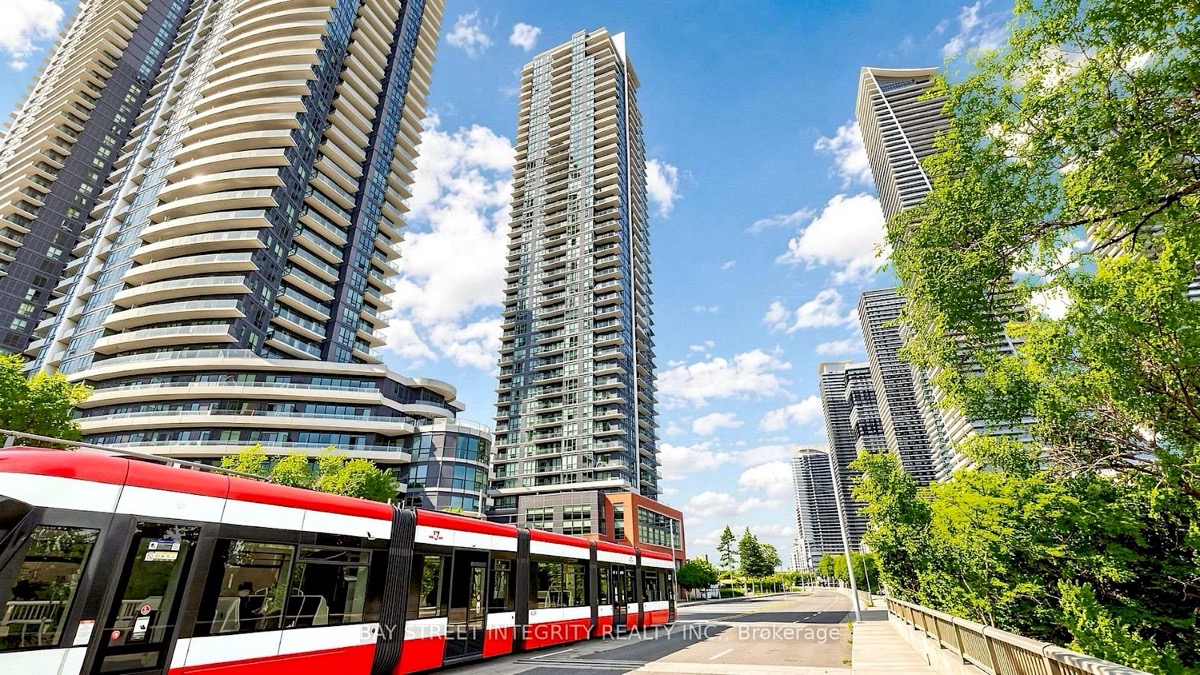
Humber Bay Shores / Etobicoke · 2026 landlord guide
Your condo brings in $3,000 in rent. Does that mean you're making money? Not necessarily. Let's separate the rent cheque from what remains after real ownership costs.
See the simple monthly calculation ↓The answer in 30 seconds
Imagine you own a two-bedroom condo near Park Lawn and Lake Shore. You find a tenant at $3,000 per month. That rent is your starting point, not your monthly take-home income. Condo fees, tax, insurance, utilities, repairs, vacancy, leasing costs and financing can change the answer completely. This is a teaching scenario, not an actual listed suite or a promise of achievable rent.
Start with the rent a comparable, actually leased unit supports. Deduct every recurring ownership cost. Then run the math again with the exact mortgage payment and a realistic vacancy or repair scenario.
Real local lease evidence, not a rent guarantee
Updated October 15, 2026: I reconciled 110 completed condo-apartment leases at 2200, 2212 and 2220 Lake Shore Boulevard West in the rolling 12 months from October 16, 2025 to October 15, 2026. This uses the archived REALM/PropTx transactions plus five newly verified late-September/October leases, removing 11 leases that have rolled outside the new period. These are historical completed transactions, not today's asking rents. Each building, layout and size needs its own comparisons.
Source: REALM/PropTx completed-lease records for exactly three Westlake towers, reconciled October 15, 2026 against the archived September research underlying our Westlake Village guide. Period: October 16, 2025–October 15, 2026. The previous archived report covered 116 leases in September 20, 2025–September 19, 2026; the updated rolling cohort has 110 after 11 old transactions fall out and five new ones enter. Median rents do not establish the asking rent for every Humber Bay Shores condo. Parking, den, exposure, floor, condition and inclusions all matter.
Illustrative worksheet · not an actual owner statement
These expense figures are deliberately disclosed assumptions for teaching the calculation. Replace every number with your own unit's documents and financing.
| Item | Monthly amount |
|---|---|
| Monthly rent (illustrative)Gross revenue | $3,000 |
| Condo maintenance feeVerify current fee and inclusions | −$700 |
| Property taxExample only; use actual Toronto tax bill | −$260 |
| Landlord insuranceObtain a quote for the exact use | −$55 |
| Owner-paid utilitiesDepends on metering and lease | −$75 |
| Repairs / maintenance reserveBudget allowance, not an invoice | −$120 |
| Vacancy allowance (5% of rent)Planning allowance, not guaranteed vacancy | −$150 |
| Income before mortgage | $1,640 |
| Illustrative mortgage payment | −$1,900 |
| Estimated monthly cash flow | −$260 |
That is a potential monthly cash shortfall even though the tenant pays $3,000. It does not mean the property necessarily loses $260 in accounting profit or investment value.
In a mortgage payment, some money may reduce your loan principal, increasing equity. Principal repayment is still a cash outflow. It is not normally deductible from rental income for income-tax purposes.
Not included in this worksheet: one-time leasing commission, property-management fees if used, major capital repairs, special assessments, income taxes, capital gains, or any appreciation/depreciation. A leasing fee equal to one month's rent, for example, would be another $3,000 cost in the year incurred.
Three numbers that serve different purposes
What the tenant pays in the illustrative month, before operating costs, financing and tax.
Illustrative rent less the listed operating costs and allowances, but before the mortgage.
Illustrative amount left after paying the full mortgage payment, before personal income tax and unmodelled costs.
Taxable net rental income needs its own calculation: under CRA guidance, reasonable current rental expenses and qualifying borrowing interest may be deductible, whereas mortgage principal is not. Some improvements are capital expenses rather than immediate deductions. Confirm the appropriate treatment with your accountant.
Before you set the asking rent
Compare recent completed leases in the same building first, matching bedrooms, den, actual square footage, parking, exposure, condition and lease inclusions. Look at current competition too. A building-wide median is a starting point, not a pricing instruction.
Confirm the current fee, included utilities and parking, condominium insurance provisions, reserve-fund health, rules for leasing and any known special assessments. Do not substitute a historical MLS fee for current owner documents.
Use the specific unit's Toronto property-tax bill; the citywide tax rate is not a universal monthly amount. Get landlord insurance and utility quotes and reserve money for appliance failures, repairs, vacancies and turnover.
Review the actual principal, interest, amortization and renewal risk. Compare the after-cost cash flow with what selling could free up after closing costs, tax and mortgage discharge obligations. Keep capital repayment separate from spendable income.
Ontario rules that change the decision
For most residential tenancies, Ontario requires its standard lease. Confirm condominium rules and occupancy requirements. A tenancy agreement cannot remove rights under the Residential Tenancies Act. If you are considering nightly Airbnb-style stays instead of a long-term lease, review Toronto's principal-residence and condo short-term rental rules first; the cash-flow study here is for regular condo rentals.
Ontario's 2026 guideline is 2.1% and its announced 2027 guideline is 1.9% for most rent-controlled homes. Many units first occupied for residential purposes after November 15, 2018 are exempt from the guideline, but an exemption must be factually supported. Timing and prescribed-notice rules still matter. See the 2018 exemption evidence and N1/N2 notice guide before setting a new rent. If your current tenant is leaving, first review the N9/N11 termination, deposit and condo corporation move-out checklist rather than assuming the suite is vacant.
Ontario Human Rights Commission guidance permits relevant rental history, credit and income information when used lawfully and fairly. Do not impose arbitrary rent-to-income ratios or discriminate based on protected characteristics. Limit access to applicants' sensitive documents.
These are general considerations as of October 15, 2026, not legal or tax advice. Verify the current rules and consult qualified advisers for specific circumstances.
Rent it, sell it or hold it vacant?
Comparable leases support your rent target, you can absorb a vacant month or major repair, and the long-term economics—including mortgage paydown and risks—fit your goals.
Carrying costs strain your budget, substantial equity has a better near-term use, or the time and risk of managing a tenancy outweigh the potential long-term benefits.
Neither option is universally better. Ask for a unit-specific lease comparison and a realistic sale comparison, including costs of either choice.
Save this before listing your condo for lease
Frequently asked questions
No. Rent is gross revenue. Subtract maintenance fees, property taxes, landlord insurance, owner-paid utilities, repairs, vacancy and leasing costs to estimate operating income; then account for mortgage payments and taxation separately.
In the verified REALM condo-apartment lease sample from October 16, 2025 through October 15, 2026 across 2200, 2212 and 2220 Lake Shore Boulevard West, the median was $2,350 for primary one-bedroom units and $3,000 for primary two-bedroom units. The rolling sample has 110 completed leases. These are historical transaction medians, not a quote for a particular available unit.
No. CRA guidance distinguishes deductible interest from non-deductible mortgage principal. The tax result is different from cash flow, and the facts and use of borrowed funds matter. Consult a qualified accountant.
Ontario Human Rights Commission guidance permits certain rental-history, credit and income information when considered fairly. An arbitrary rent-to-income cutoff and discrimination on protected grounds are not appropriate. Protect applicant privacy and use relevant information consistently.
No single rule applies to every unit. Ontario generally exempts units first occupied for residential purposes after November 15, 2018 from the rent-increase guideline, subject to the legislation and facts; verify occupancy history for the particular unit.
No. Ontario’s standard lease is required for most residential tenancies; condominium declarations, rules and bylaws may also matter. Lease terms cannot override the Residential Tenancies Act.
Compare after-expense rental cash flow, mortgage principal paid down, future repair and vacancy exposure, available equity, transaction costs and your alternatives. Neither a neighbourhood median rent nor one positive month is enough to answer this for a specific owner.
Method and sources
Market evidence: the archived Westlake Village 2026 analysis and a fresh October 15, 2026 REALM/PropTx check. Scope: 110 unique completed condo-apartment leases dated October 16, 2025–October 15, 2026 at exactly 2200, 2212 and 2220 Lake Shore Boulevard West. From the prior archive of 116 condo-apartment leases ending September 19, 2026, 11 older leases fell outside the new 12-month window. Five new completed leases entered: two at 2200 Lake Shore and three at 2220 Lake Shore; none at 2212 in the September 20–October 15 search window. We verified the five new MLS records against their individual REALM broker listing sheets, including transaction dates and leased prices, and checked all 87 overlapping 2026 MLS records from the live tables against the archive. Rounded medians use primary bedroom counts, so one-bedroom-plus-den is grouped with primary one-bedroom layouts. Common-element condo transactions are excluded. The results are a three-building case study, not an area-wide rental index or quote for a particular suite. The cash-flow worksheet uses illustrative assumptions, not observed condo ownership bills.
Make a decision with your own numbers
Tell me the building, suite type and approximate rent. I can help compare recent completed leases and look at the practical tradeoffs before you decide to rent or sell. You can use the checklist above without contacting me.