MDMoh DianMohammad Hassan Mohammadian · Realtor®
Menu
Plan your move↗
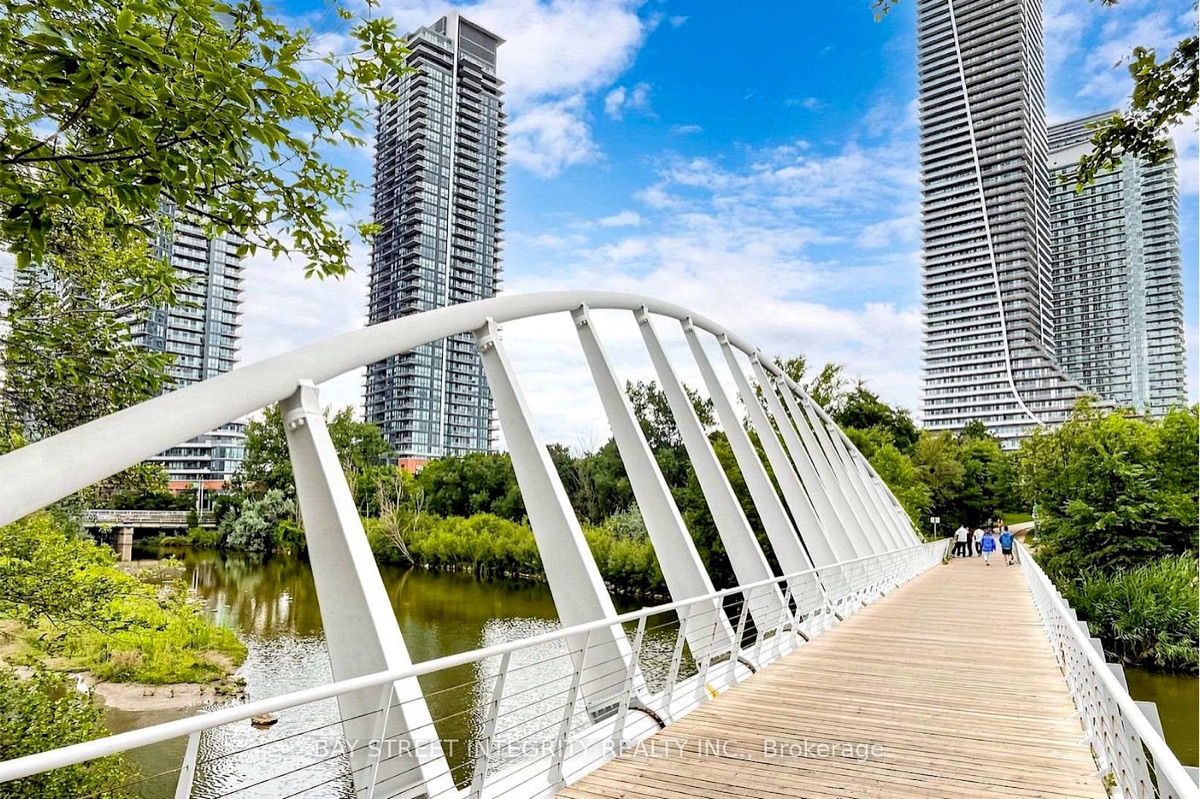
Humber Bay Shores Toronto condo towers, area context only; this guide does not identify any tower as allowing Airbnb

Toronto condo buyer decisions · October 2026

Buying a condo for Airbnb? Check the rules before the revenue.

A beautiful lake view and high advertised nightly price don't establish a legal short-term rental. Toronto requires a real principal residence, and your condominium corporation can add its own restrictions.

Principal residence180-night ceiling6% Toronto MAT
Check your Toronto condo plan ↓

Two owners see the same listing. Only one may qualify.

A condo can look like a great Airbnb investment—and still be ineligible.

Imagine a buyer purchasing a second Toronto condo specifically to offer nightly stays. They have compared furnishing costs, monthly fees and optimistic nightly rates. But they will not live there. That plan fails Toronto's short-term rental principal-residence rule before the revenue spreadsheet even matters.

Now imagine a resident who ordinarily lives in their condo and occasionally rents their own home while travelling. Toronto allows some registered short-term use of genuine principal residences, subject to its rules—but the condo corporation may still prohibit short stays. The difference is legal eligibility, not just return on investment.

Neither scenario identifies a real listing, and no Toronto building is assumed Airbnb-friendly here. These are examples to help buyers, landlords and tenants avoid relying on outdated platform advertisements.

A buyer story with two endings

Same condominium market. Very different legal paths.

Buyer A · A second condo for nightly rental

A dedicated investment condo

City eligibility fails before profitability matters.

Imagine buying an additional condo in Humber Bay Shores because a nightly listing suggests attractive revenue. If you do not ordinarily live there and the condo is not your principal residence, Toronto does not allow registering it as a short-term rental—regardless of whether the condominium corporation would otherwise allow short stays.

Compare realistic long-term rental economics and governing documents instead. A stay of 28+ days is a separate legal question, not an automatic workaround.

Compare verified condo landlord costs →
Resident B · Renting home while away

Your actual principal residence

Possible—but only after checking every layer.

Imagine you live full-time in your Toronto condo and want to rent it while travelling. The City allows registered entire-unit short stays for up to 180 nights per calendar year, but only if your principal-residence claim is genuine and your corporation permits short-term rentals.

Confirm condo rules, registration and rental type, emergency contacts, insurance, guest responsibilities and tax filing before advertising.

Review legally governing condo documents →

Five layers of permission and responsibility

A registration number is not the whole answer.

Think through these layers in order. A City registration, condo permission and a sound financial plan are separate requirements. Passing one does not cure a failure of another.

01Municipal eligibility

Is this truly your principal residence?

Toronto permits short-term rentals only in the host’s principal residence—the place they ordinarily live and use for identification, bills, tax and insurance. A second home or dedicated investment condo cannot be registered as a Toronto short-term rental under these rules.

02Corporation documents

Does the condo actually permit short stays?

A condo corporation can prohibit or restrict short-term rentals through its declaration, by-laws or rules. A City registration is not permission to ignore a corporation’s documents. Request the current governing documents and specific leasing rules.

03City registration

Have you been approved to advertise?

Toronto hosts must register and renew annually. Operators need proof of principal residence and must display the issued City STR registration number in advertisements. Only one registration per dwelling unit is permitted. Registration may involve document checks and inspections.

04Type and duration

Entire home or part of your home?

As of January 2025, an operator chooses entire-unit or partial-unit status at registration. Entire-unit rentals are limited to 180 nights per calendar year. Partial-unit registrations have different room rules, including at most three advertised bedrooms and one fewer than the bedrooms available in the principal home.

05Guest and financial obligations

Who handles the tax, safety and damage?

Toronto’s current short-term Municipal Accommodation Tax is 6% for stays beginning August 1, 2026 or later. Registered operators file MAT reports even when a platform collects tax. Keep an emergency contact and exit plan, verify suitable insurance, and understand that the condo owner may remain responsible for guest damage.

Use this before you tour or list

Does your short-term rental plan clear the first hurdles?

This is an educational screening tool, not an eligibility certificate. Use it to find your next question. Registration approval, governing documents and applicable law—not a website calculator—determine whether a specific arrangement is permissible.

Answer what you can prove

Five questions before investing or listing.

Unknown is a valid answer. Leaving something unverified is safer than guessing that a building permits Airbnb.

Next verification needed

Confirm the missing information first

Select your actual answers, gather the City and condominium evidence, and check the registration details before advertising. This is only a screening tool.

Educational example only

What do hypothetical bookings mean?

These editable numbers are not permission to host, real Toronto nightly prices or an earnings forecast. Use them to understand why gross bookings and guest taxes should not be confused with profit.

Gross room sales (not profit)$12,000
6% Toronto MAT on that example$720

Municipal Accommodation Tax is normally charged to the guest on taxable accommodation and may be collected by a platform. The operator still has MAT filing obligations. Do not treat collected tax as host earnings, or assume a 6% deduction from gross sales equals actual income taxes.

The screening result does not establish City registration, condo approval, tenant consent, tax compliance or legal eligibility. An operator must follow the actual City of Toronto by-law, registration conditions, governing condo documents and any applicable federal/provincial rules. For a tenant, the City does not require landlord consent to issue registration, but the tenancy agreement and corporation rules still matter.

The difference between bookings and profit

Even legal Airbnb revenue needs an honest expense calculation.

Suppose a qualifying registered Toronto resident uses an invented $200 room price per night and books 60 entire-home nights during the year. That is $12,000 in hypothetical gross room sales, not profit. At Toronto's current 6% MAT rate, a separate $720 of Municipal Accommodation Tax is calculated on those hypothetical sales. It is normally a guest tax to collect or account for, not money the host gets to keep.

Gross value is not net income$12,000

Invented 60 nights × $200 per night. This is not a 2026 market rate, a booking forecast, or permission to operate for 60 nights.

6% municipal guest tax$720

Illustrative MAT for the same room sales at the City's current rate. Check how booking platforms collect it and file the required reports even if the platform remits.

Actual costs and risksVariable

Platform fees, insurance, cleaning, turnovers, condo fees, repairs, taxes and lost availability can materially change economics. CRA non-compliance rules can also deny related expense deductions.

Toronto's municipal definition covers paid stays under 28 consecutive days. The CRA uses a distinct under-90-day short-term rental definition for the relevant federal tax rules. Do not assume that stays of 28 days or longer automatically avoid rental legislation or condo restrictions.

Rules updated since 2024

Why an old Airbnb investment video can be misleading in 2026.

2024 updates

Stronger principal-residence verification

The City can ask for multiple residence documents, verify applications, conduct annual inspections and limit registration to one operator per dwelling unit.

2025 updates

Entire-unit or partial-unit registration

Operators choose the type of short-term rental when registering or renewing. Entire homes are subject to the 180-night limit; partial-unit hosting has different bedroom and advertising limits.

August 2026 update

Municipal tax is back to 6%

Toronto says its temporary 8.5% Municipal Accommodation Tax ended July 31, 2026. The 6% rate applies to stays beginning August 1, 2026 onward. Confirm fees and taxes again before advertising.

Bring this list to your agent, lawyer or corporation

Seven questions before buying, hosting or signing a lease.

  1. Am I buying a second condo?

    If yes, I cannot assume Toronto will register it for Airbnb. I need to consider a lawful long-term rental or other housing strategy, not nightly revenue projections.

  2. Do I actually live at this address?

    I can substantiate my principal residence with my government ID plus supporting documents such as utility bills or purchase/lease records. I should not use an investment address for a fictitious principal-residence claim.

  3. Which condo corporation and documents apply?

    I have the declaration, by-laws and current rules, not just a broker or platform description. I asked the manager specifically about short rentals, minimum lease periods, guests and any registration restrictions.

  4. Am I offering the whole unit or only rooms?

    My intended rental type matches the City registration. For entire units, I have checked the 180-night calendar-year limit; for partial units, I checked the room and bedroom rules.

  5. Is my registration approved?

    I applied personally, used acceptable Ontario ID with the correct principal-residence address, supplied supporting documents and received the valid registration number before advertising.

  6. Did I budget for tax, insurance and compliance?

    I can account for the current 6% MAT, quarterly reporting, platform charges, turnover, cleaning, repairs, condo costs and income taxes. I also asked an accountant about possible CRA expense restrictions if non-compliant.

  7. If I am a tenant, what does my lease allow?

    The City does not make landlord consent a condition of City registration, but my tenancy agreement and condo rules can still create obligations or disputes. I should seek written confirmation rather than rely on the City alone.

Short-term rentals: common questions

Rules buyers and hosts should know.

Can I buy a Toronto condo only to operate an Airbnb?

A dedicated second home or investment unit that is not the operator’s principal residence is not eligible for Toronto’s registered short-term rental program. That municipal rule applies even if a building’s condo documents otherwise allow short stays. Check lawful long-term alternatives and condo rules before buying.

What counts as a short-term rental in Toronto?

The City defines a paid short-term rental as all or part of a dwelling rented for less than 28 consecutive days. That is distinct from the CRA’s separate less-than-90-day short-term rental definition for federal tax rules.

Does a City STR registration override condominium rules?

No. Toronto’s own guidance notes that condo declarations, by-laws and rules can restrict or prohibit short-term rentals. Request and review the current governing documents for the exact corporation and address before listing or buying.

Can an entire Toronto condo be rented on Airbnb for 365 nights?

No. A registered operator who rents their entire principal residence to short-term guests is limited to 180 nights per calendar year. This 180-night ceiling is not an occupancy or income forecast; actual bookings may be much fewer. Switching registration types can affect how nights are counted.

Can I rent rooms indefinitely if I live in my own condo?

Toronto’s partial-unit rules can permit room rentals for an unlimited number of nights, but the registration is limited to the appropriate partial-unit type, up to three bedrooms and no more than one fewer than the total available bedrooms of the principal residence. Condo governing documents may still impose stricter restrictions.

Can a tenant operate an Airbnb in a rented condo?

The City permits principal-residence tenants to apply and says landlord consent is not required for the municipal registration itself. However, the City recommends checking the lease or obtaining written landlord permission. A condo corporation’s rules and other legal obligations may restrict the arrangement.

Is the Toronto short-term rental Municipal Accommodation Tax 8.5% in October 2026?

No. Toronto says the temporary 8.5% tax ended July 31, 2026. The Municipal Accommodation Tax is 6% for short-term stays beginning August 1, 2026 onward. Operators still must file the required reports, even where a booking platform collects the tax.

What does the $390 Toronto registration fee cover?

Toronto’s official 2026 short-term rental operator renewal fee is $390, subject to future annual increases. Confirm the applicable new-application or renewal fee with the City before paying, and do not mistake a paid application for approval.

Can I avoid Toronto rules by asking for stays of 28 nights or more?

Do not treat longer stays as a blanket workaround. Toronto defines short-term stays as less than 28 consecutive days, but longer occupancy may create residential-tenancy rights and remain subject to condominium governing documents, leases, other municipal rules and tax obligations. Have the intended operating model reviewed before marketing it.

What happens to tax deductions if an Airbnb is non-compliant?

The CRA changed the income tax rules after 2023: non-compliant short-term rentals may lose related expense deductions for periods of non-compliance. The CRA uses a separate short-term threshold of less than 90 consecutive days for these tax rules. An accountant should review the exact facts.

Does owning a parking spot or a condo guest suite give short-rental permission?

No. Exclusive-use areas, parking rights and building guest suites do not establish City or condo permission to run short-term rentals. The legal residence, corporation rules and appropriate City registration govern the question.
Official references · Checked October 15, 2026

Verify the rules with the City, your condo and the CRA.

All examples are hypothetical, and this guide does not represent a legal determination for any particular Toronto building. Short-term rental rules and municipal taxes can change. Review your current condo governing documents, verify the applicable registration and ask a lawyer or tax professional about the proposed operation.

City of Toronto · Short-Term Rental Operators/Hosts ↗Principal-residence qualification, registration, 180-night limit, entire/partial rules, 2026 renewalCity of Toronto · Municipal Accommodation Tax ↗6% for stays from August 1, 2026; reports and remittance, including platform-collected taxCity of Toronto · Registration portal ↗Official application prerequisites and address-matching identificationCondominium Authority of Ontario · Short-term rental restrictions ↗Declarations, by-laws, rules and corporation responsibilitiesCondominium Authority of Ontario · Condominium rules ↗Legal power of condo rules to regulate short-period rentalsCanada Revenue Agency · Non-compliant short-term rentals ↗Federal rules denying specified expense deductions after 2023; different under-90-day definition

Choosing a Toronto condo for living or investing?

Confirm what the property can legally do before pricing the returns.

Tell me your timeline, budget and intended use. We can compare resale alternatives, the real monthly ownership costs and the documents your lawyer should review before an offer.

Plan a condo purchase ↗